
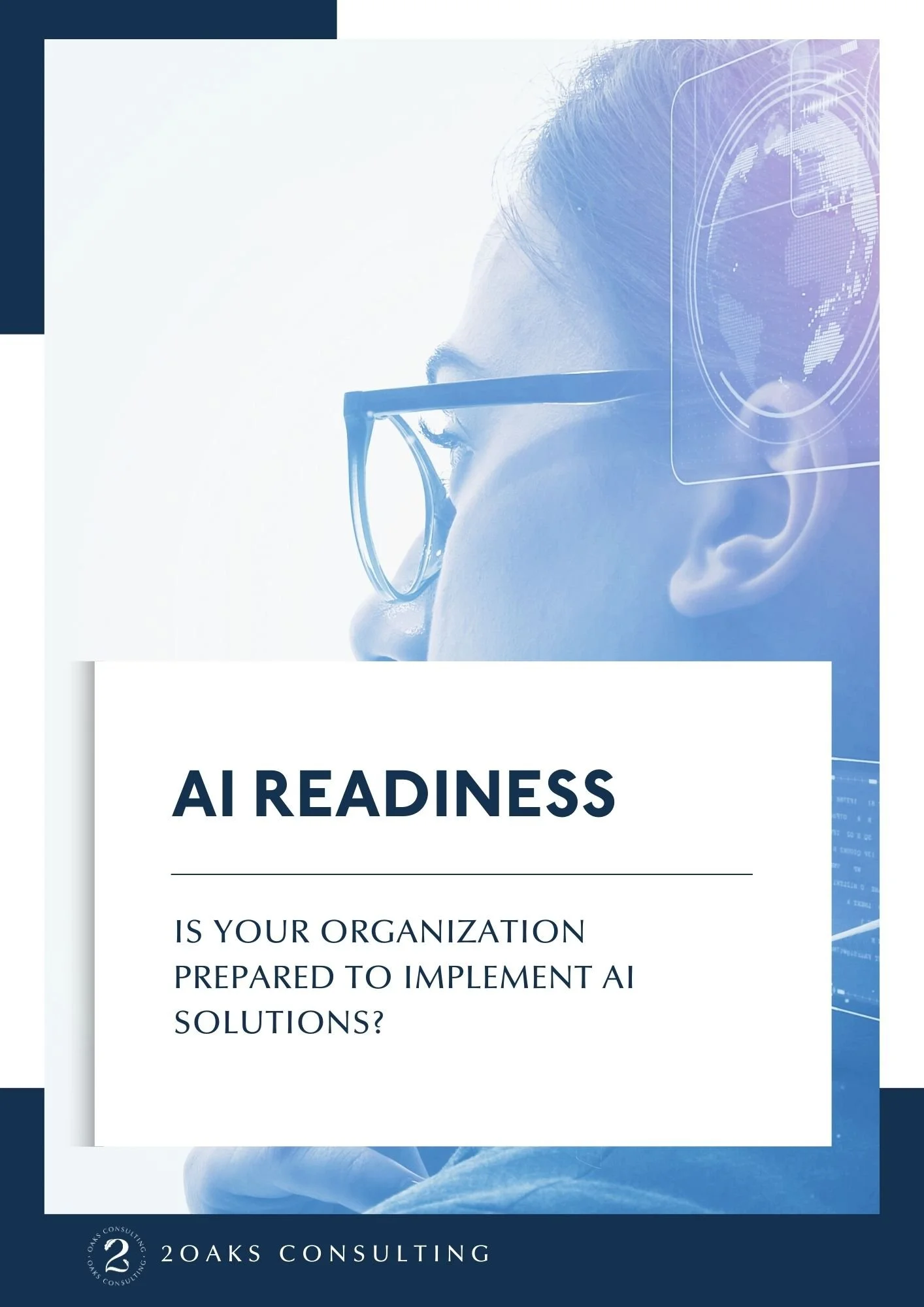
AI READINESS
IS YOUR ORGANIZATION PREPARED TO IMPLEMENT AI SOLUTIONS?
Beyond the Hype
WHAT READINESS ACTUALLY MEANS
The question facing most financial institution leaders today isn't whether AI will impact their operations, but whether their organization is prepared to implement AI solutions effectively when opportunities arise.
AI readiness extends far beyond having the latest technology or hiring data scientists. It encompasses technology infrastructure, organizational policies, human capabilities, operational processes, and security frameworks working together to support successful implementation.
Many organizations discover readiness gaps only after committing to AI initiatives, leading to delayed timelines, cost overruns, or failed implementations. A systematic assessment before beginning AI projects can identify these gaps while they're still manageable to address.
The Five Pillars of AI Readiness

UNDERSTANDING WHAT YOUR ORGANIZATION NEEDS
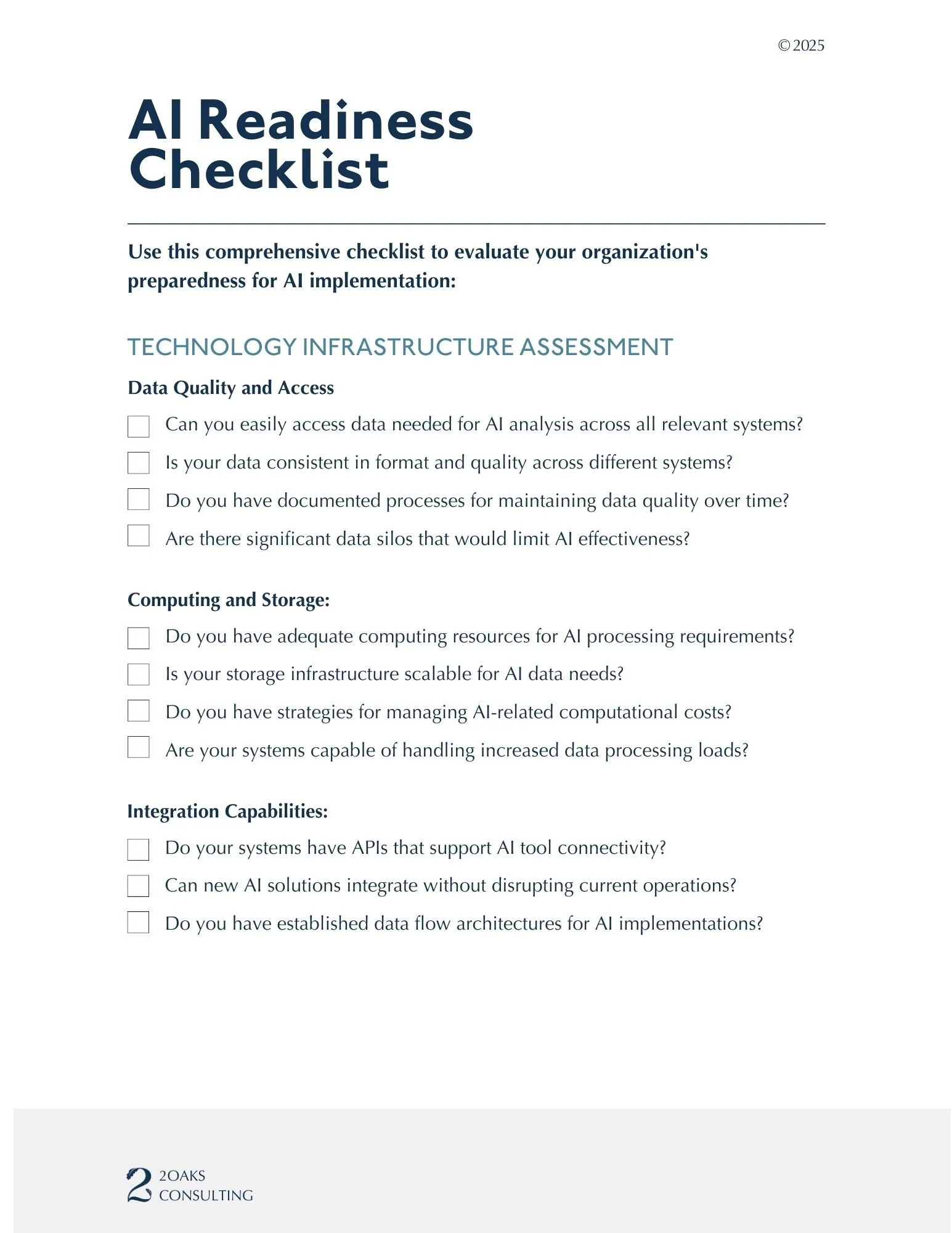
1. Technology Infrastructure:
The Foundation Layer
Data Quality and Accessibility:
AI systems require clean, well-organized data to function effectively. Many financial institutions store critical information across multiple systems with inconsistent formats, incomplete records, or access restrictions that limit AI effectiveness.
Computing and Storage Capabilities:
AI applications, particularly those involving complex analysis or large datasets, require adequate computing resources and storage infrastructure. Cloud platforms can provide scalability, but organizations need strategies for managing computational costs.
Integration Architecture:
Most AI solutions must connect with existing systems to provide value. Organizations need API frameworks, integration platforms, and data flow architectures that support AI tool connectivity without disrupting current operations.


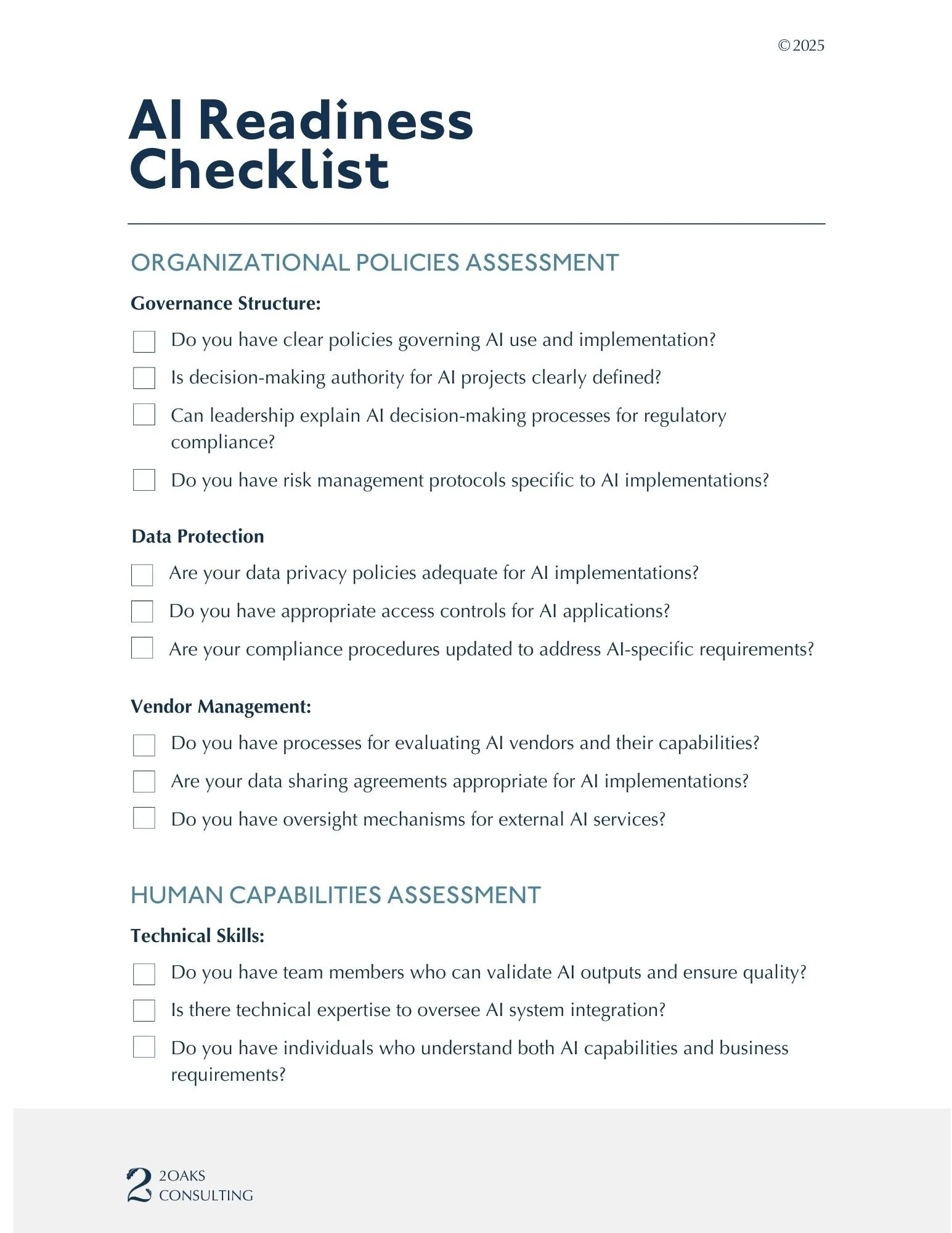
2. Organizational Policies:
The Governance Framework
AI Governance Structure:
Financial institutions require clear policies governing AI use, including decision-making authority, risk management protocols, and approval processes for new implementations.
The regulatory environment adds complexity, as board members and senior management must demonstrate explainability for AI-driven decisions. This requires understanding where AI is used across business units and maintaining visibility into AI decision-making processes.
Data Protection and Privacy:
AI implementations often involve processing sensitive financial data across multiple systems. Organizations need policies ensuring customer data protection, regulatory compliance, and appropriate access controls for AI applications.
Vendor Management:
Many AI solutions involve third-party tools or services, requiring policies for evaluating AI vendors, managing data sharing agreements, and maintaining appropriate oversight of external AI services.


3. Human Capabilities:
The Skills Equation
Technical Expertise:
While AI tools are becoming more accessible, organizations still need team members who understand software engineering principles, data analysis, and system integration to validate AI outputs and ensure proper implementation.
The skills requirement has shifted toward validation and architecture rather than detailed coding expertise, but technical oversight remains essential for successful implementations.
Subject Matter Expertise:
AI solutions require deep understanding of business processes and requirements to be effective. Organizations need individuals who can bridge the gap between AI capabilities and business needs.
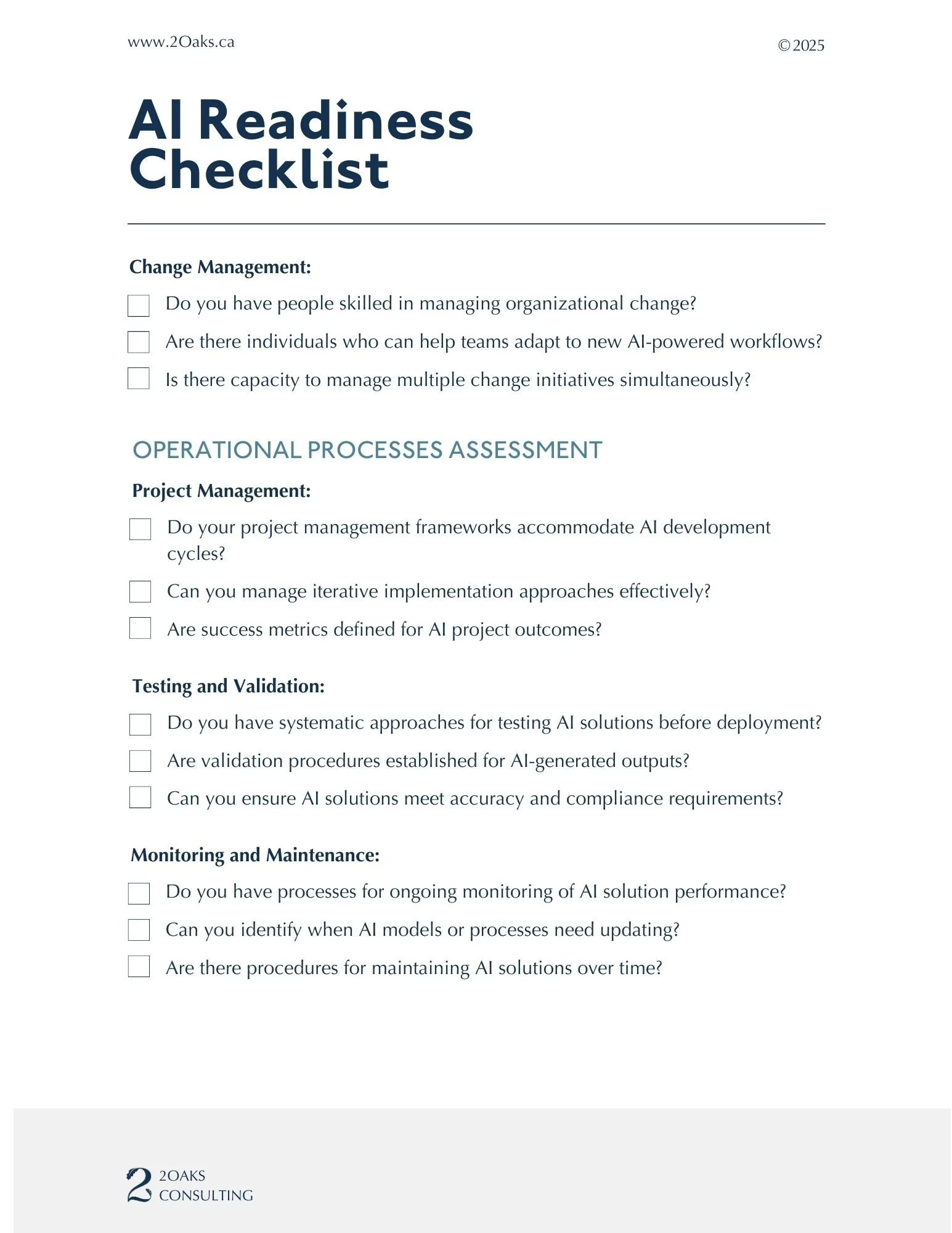
Change Management Capabilities:
AI implementations often change workflows, decision-making processes, and job responsibilities. Success requires people skilled in managing organizational change and helping teams adapt to new tools and processes.


4. Operational Processes:
The Workflow Integration
Project Management Frameworks:
AI projects often have different timelines and success metrics than traditional IT projects. Organizations need project management approaches that accommodate AI development cycles and iterative implementation methods.
Testing and Validation Procedures:
AI-generated outputs require validation processes to ensure accuracy, compliance, and business relevance. Organizations need systematic approaches for testing AI solutions before production deployment.
Performance Monitoring:
Once implemented, AI solutions require ongoing monitoring to ensure continued effectiveness and identify when models or processes need updating.


5. Security Considerations:
The Risk Management Layer
Cybersecurity Frameworks:
AI systems can create new attack vectors, including data poisoning attempts and manipulation of AI decision-making processes. Security frameworks must account for AI-specific vulnerabilities.
Access Control:
AI tools often require access to sensitive data and systems. Organizations need robust access control mechanisms ensuring appropriate permissions without creating security gaps.
Audit and Compliance Capabilities:
Regulatory requirements demand clear audit trails for AI driven decisions. Organizations need systems and processes supporting comprehensive documentation and review of AI implementations.

Common Readiness Gaps and Solutions
Data Silos:
Implement data integration platforms or establish data sharing protocols between systems.
Skills Misalignment:
Develop training programs that build AI literacy while recruiting individuals who understand both business and technical requirements.
Policy Vacuum:
Create AI governance frameworks that address regulatory requirements and risk management.

Infrastructure Limitations:
Upgrade systems to support AI integration or establish cloud-based AI processing capabilities.
Change Management Underestimation:
Develop comprehensive change management plans that address workflow, training, and cultural adaptation needs.
Working with Implementation Partners
HOW EXTERNAL HELP CAN DELIVER EXCEPTIONAL VALUE
AI readiness assessment often benefits from external perspective and expertise. Implementation partners can provide:
OBJECTIVE ASSESSMENT
External review of organizational capabilities without internal bias or political considerations.
INDUSTRY EXPERTISE:
Knowledge of AI readiness requirements specific to financial services and regulatory environments
IMPLEMENTATION EXPERIENCE:
Practical understanding of how readiness gaps impact realworld AI implementations.
DEVELOPMENT SUPPORT:
Assistance building readiness capabilities while maintaining focus on core business operations.
At 2Oaks, we work with financial institutions to assess AI readiness comprehensively, identifying both opportunities and obstacles before beginning implementation projects. Our approach focuses on practical readiness building that supports successful AI adoption while managing risk and regulatory requirements.
Moving From Assessment to Action
An AI readiness assessment provides the foundation for strategic AI implementation, but readiness building is an ongoing process rather than a one-time achievement. Organizations that treat readiness as a continuous capability development effort position themselves to capitalize on AI opportunities as they emerge.
The key question for financial institution leaders: Will your organization be ready when the right AI opportunity presents itself, or will readiness gaps force you to wait while competitors gain advantages?
Systematic readiness assessment and development ensures that when promising AI applications align with your business needs, your organization can act quickly and effectively rather than spending months building foundational capabilities.
Ready to assess your organization's AI implementation readiness? Contact 2Oaks to learn how our comprehensive assessment approach can identify opportunities and obstacles while building the capabilities needed for successful AI adoption.
Follow our LinkedIn page for our upcoming post series on AI implementation. Looking for your own checklist? All three Real-World AI articles are available on our website’s Insights page
DOWNLOAD THE DOCUMENT HERE (CLICK ON THE IMAGE BELOW)
DOWNLOAD THE REMAINDER OF THE SERIES BY CLICKING BELOW
ABOUT 2OAKS
2Oaks is a consulting services company specializing in banking, financial technology, enterprise systems, and management.
Our expertise lies in bridging the gap between technology, business, and management to simplify complexity and drive successful outcomes.